
Easy step by step fish drawing for kids
*This post may contain affiliate links. This means when you click on a link and make a purchase we may earn a commission at no additional cost to you. Our goal is to provide valuable and helpful content. Any commission made can help us maintain this site and provide more quality and helpful content for our readers.*
Introduction
Learning to draw a fish can be a fun way to improve your sketching skills. By starting basic shapes and gradually adding details like the fins, scales and eyes you can create beautiful fish drawings.These guides can be perfect for kids and beginners. In this guide we will learn to draw several types of fishes such as the clown fish, jelly fish, puffer fish, golden fish, angler fish and angel fish. Grab your paper and pencil, lets start drawing. Here are some easy step by step fish drawings for kids.
Easy step by step fish drawing for kids
1. Clown fish
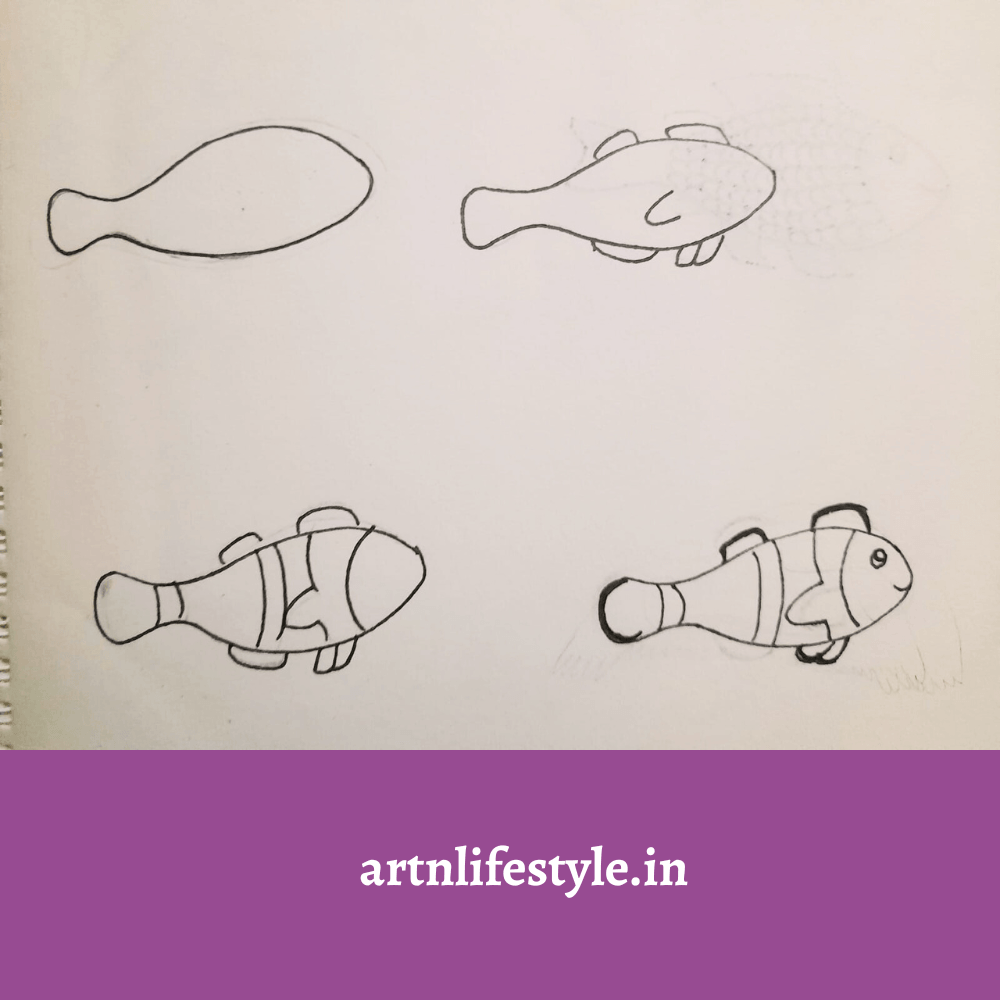
Here is a step by step guide to draw a clown fish. Start by drawing the outline of the fish. Next, draw the fins and then add the patterns on the fish. Finally draw the facial features of the fish completing the drawing.
2. Jelly fish

Here is a simple step by step guide to draw a jellyfish.Start by drawing a half circle for the jelly fish. Then draw the tentacles of the jelly fish. Complete the drawing by adding the facial features of the jelly fish.
3. Puffer fish

A simple guide to draw a puffer fish. Start by drawing a circle. Then add the fins and tail of the fish. Then add the spikes on the jelly fish. Finally add the facial features.
4. Golden fish
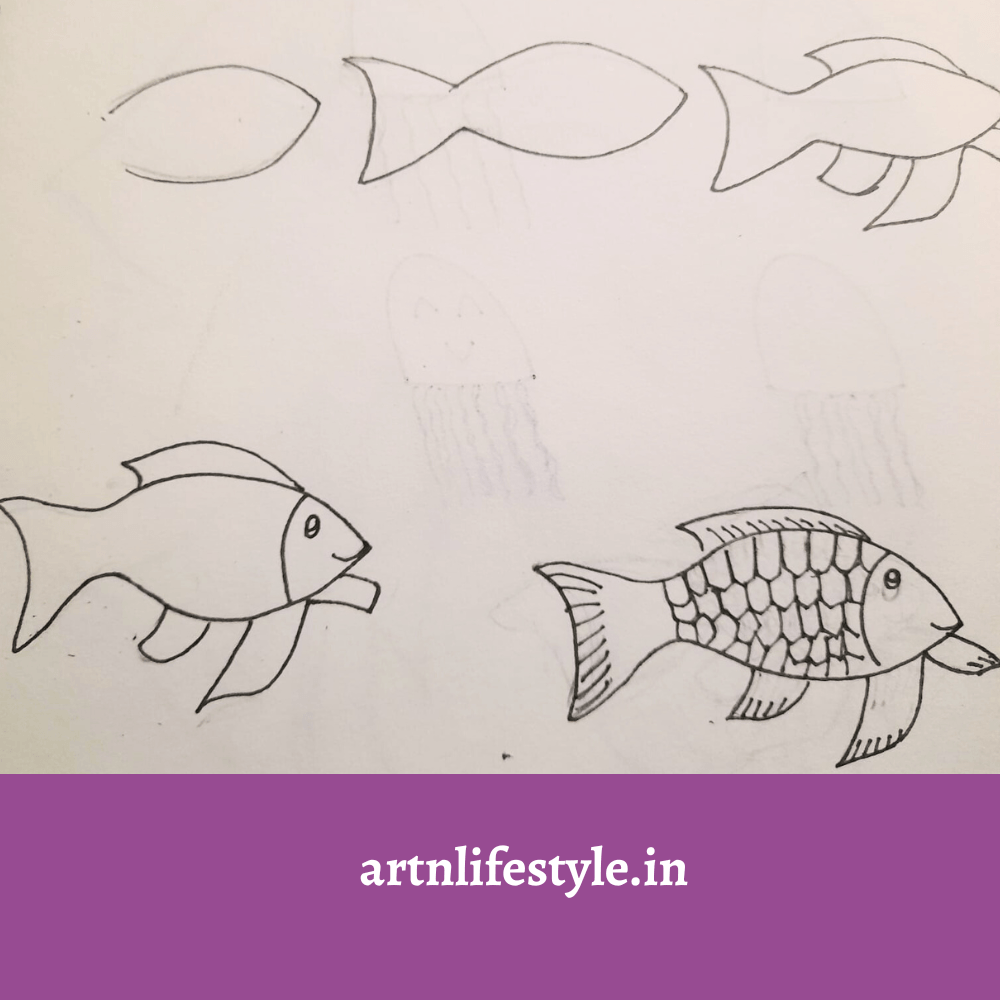
A step by step guide to draw a golden fish. First draw the outline of the gold fish. Then add the fins and tail of the gold fish. Then draw the facial features of the gold fish. Finally draw the scales on the gold fish.
5. Flying fish
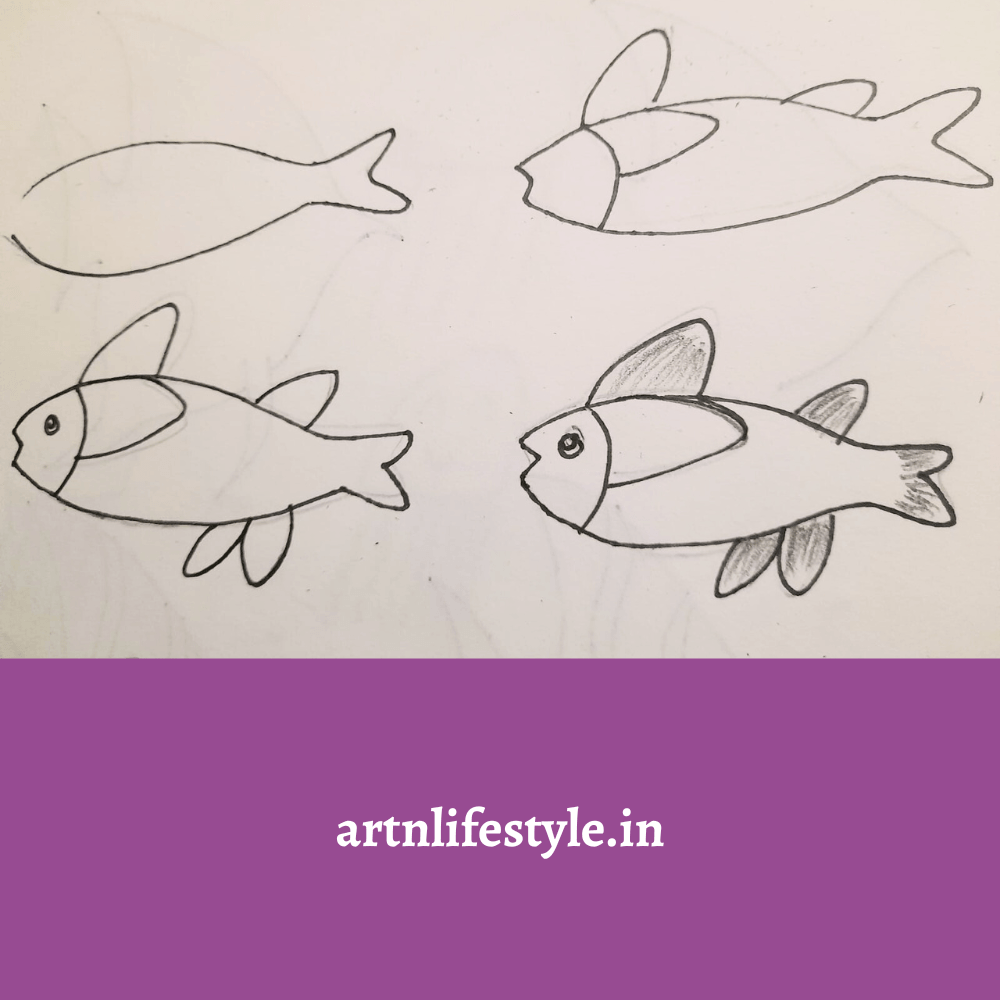
A simple guide to draw a flying fish. Start by drawing the outline of the flying fish. Then draw the fins and tail of the flying fish. Then add the facial features of the flying fish.
6. School of fish

Here is a simple tutorial to draw a school of fish. First draw the outline of the school of fishes. Then draw the facial features and the sea plants.
7. Angler fish
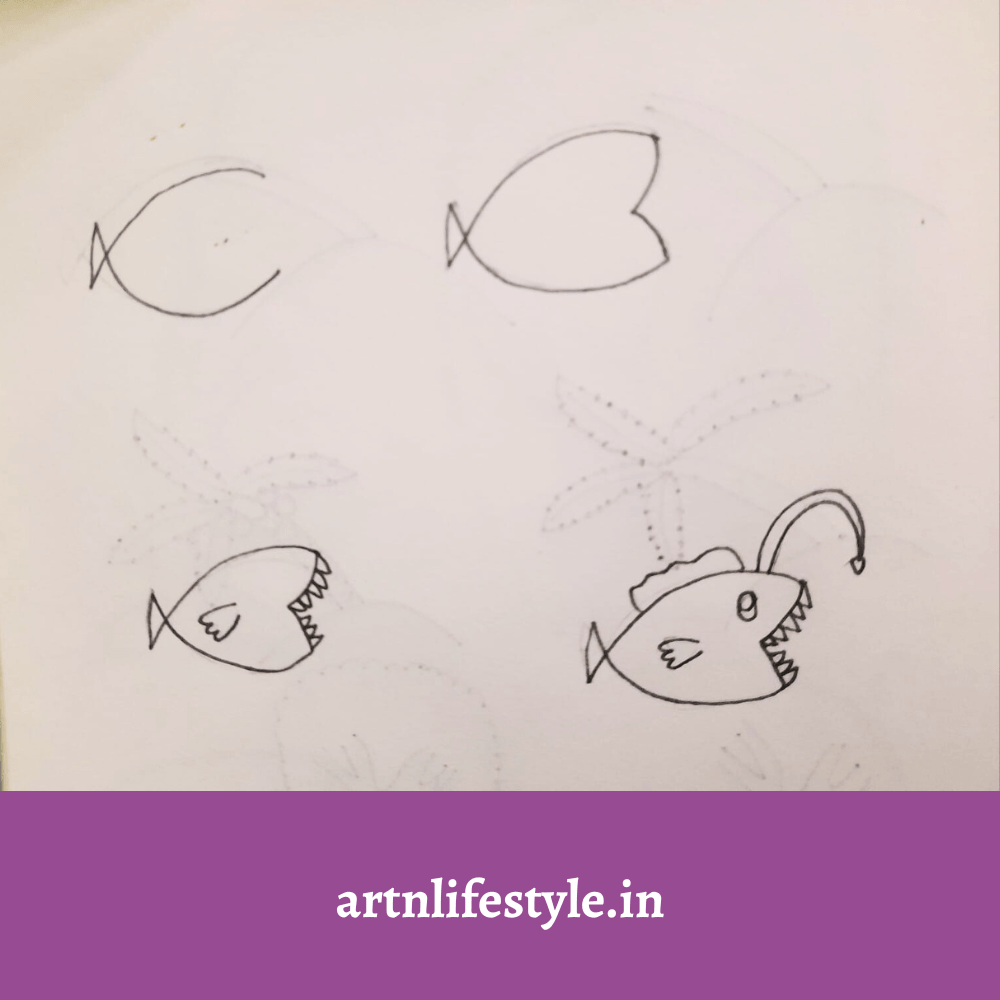
A simple step by step guide to draw an angler fish.First draw the outline of the fish. Next add the fins and the teeth of the angler fish. Finally draw the eyes and the esca.
Conclusion
Following these simple steps, can help you to draw different types of fishes. Try experimenting with different fish types, patterns and styles. Happy drawing. Check out other drawing ideas below.
Read more: