
How to grow corn from seeds in containers.
*This post may contain affiliate links. This means when you click on a link and make a purchase we may earn a commission at no additional cost to you. Our goal is to provide valuable and helpful content. Any commission made can help us maintain this site and provide more quality and helpful content for our readers.*
Corn is a warm-season crop that is native to America. It was commonly grown as a companion plant to Beans and Squash in the three sisters method. Corn is a grass and is a member of the Poaceae family. Consuming corn has many health benefits. It can be grown in homes and home-grown corn is more nutritious and has more health benefits. Here is how to grow corn from seeds in containers.
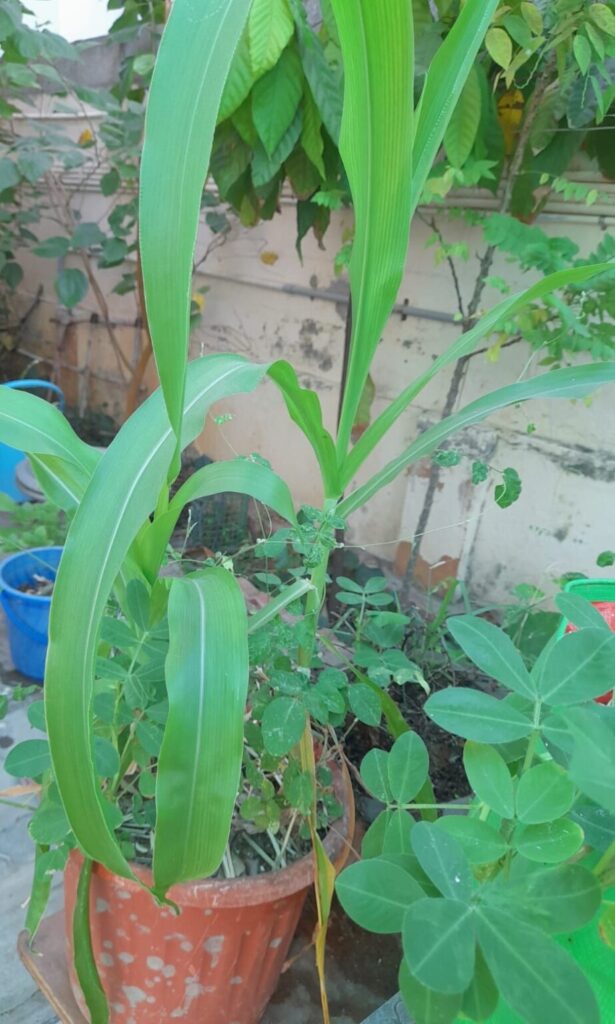
Growing Conditions
This plant is not frost tolerant so wait till the mid-spring season until the soil has warmed up before growing corn. Corn is a heavy feeder and requires fertile well-drained soil to grow. It can tolerate extreme temperatures from 10°C to 38°C (50°F to 100°F). It needs 6 to 8 hours of sunlight to grow well. To grow corn from seeds you will need a pot that is at least 14 inches deep and wide. Seeds should be sown directly in pots because the delicate roots of young corn saplings cannot tolerate transplants. Sow seeds 1 and a half inches deep and 8 inches wide. Water the soil to keep it moist. Corn has shallow roots that can get stressed easily in drought-like conditions. Mulch your plants so that water is retained. When the plant grows 8 inches tall use stakes to support the plants. Fertilize your corn plants with liquid fertiliser or compost once in 2 weeks to enhance better growth and yields.

You can harvest corn within 90 to 100 days from sowing. Corn ripens 2 weeks after silking. When tassels turn brown and kernels turn white and milky, corn is ready to be harvested. To test this pull down the husk and pierce the kernel with a fingernail. If it’s white and milky you can harvest it. Pull down the ears and twist to remove the corn from the stalk.
Pests and diseases
Some of the pests that attack your corn plants include Cucumber beetles, Corn earworms, Cutworms and Flea beetles. Planting resistant hybrid varieties, practising crop rotation, providing proper air circulation and using clean garden tools regularly can help prevent most diseases and pests. If your plants get infected by certain pests or diseases you can use diatomaceous earth or neem oil to treat them.
If you liked this article don’t forget to share. Check out other articles below.
Read more: